
PMC 1.0
Before Executive Outcomes, there was “Mad” Mike Hoare

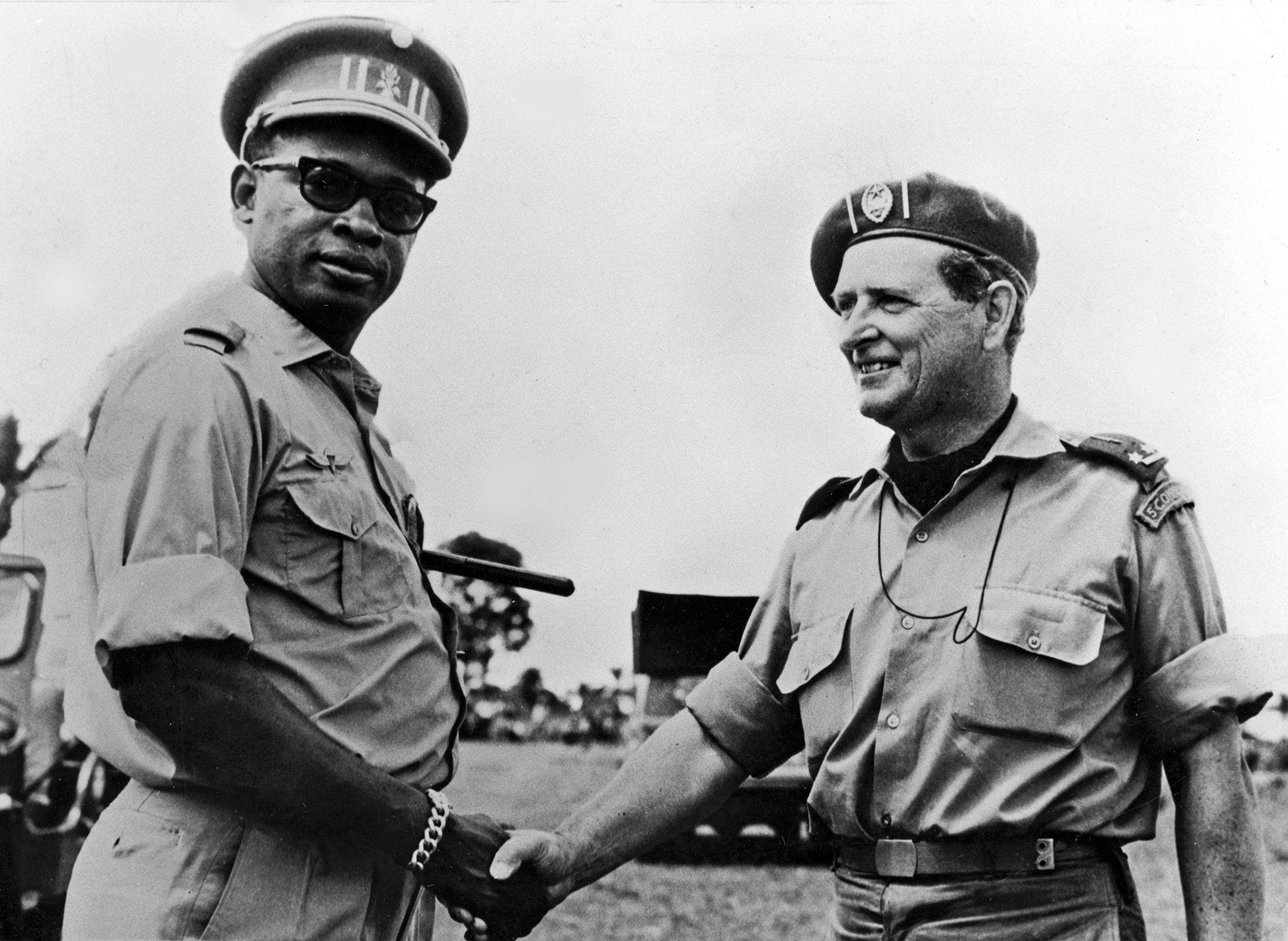
With the onset of the Cold War in the aftermath of World War II, the security affairs of states would become government-to-government matters. The US would help ensure the stability and security of those in the capitalist camp with arms, financial aid, and troops. While the USSR would make similar arrangements with those in the communist camp. But in a few select cases, for states that found themselves on the fringes of either camp, security might need to be ensured through more complex means. Colonel “Mad” Mike Hoare was once such an individual who would be used to ensure security. A former accountant, later turned safari tour guide, and even later mercenary, would later lead hundreds of mercenary troops across various campaigns in Africa. He would be one of many who would come to embody the slow evolution from the adventurer-turned-mercenary to the PMCs that we come to know today.
1960 would come to be known as the Year of Africa. In that year alone, 17 nations would gain their independence from their respective European overlords. While some transitions would go smoothly, others did not. Most newly independent African nations were unprepared for self-rule, with blame to be laid at their former colonial rulers in fact. Security and military affairs would be one of these areas where these new states would struggle. And because of this, internal stability would become a tenuous thing. This would create a need for former soldiers, ex-colonial police officers, and other former security officers. These two threads would come together in the Congo Crisis of 1960-1965. Congo would be one of the new nations that would find itself short of qualified administrators, as well as military officers. Very quickly, the new Congolese government would face secessionists crisis in both Katanga and South Kasai provinces. It was in this environment that the “modern mercenary” would rise. Specifically, the secessionist forces of Katanga Province would make extensive use of mercenary units in their ill-fated bid for independence. These French and Belgian mercenary troops later fought pitched battles with UN Peacekeeping troops. And by 1963, Katanga had been reintegrated into the First Congolese Republic. But this would only be the beginning of mercenary forces in Congo, and Africa writ large.
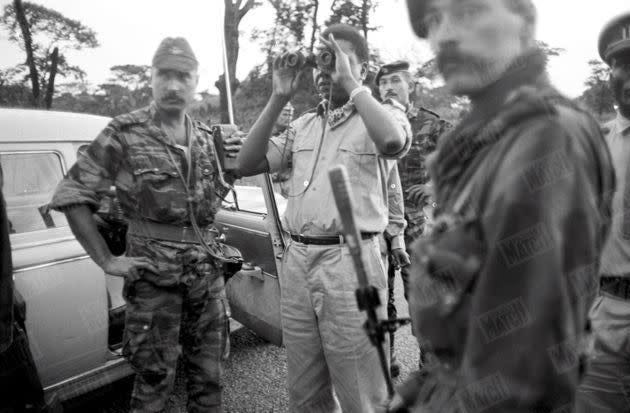
The Congo Crisis would see the beginnings of figures like Jean “Black Jack” Schramme, a former Belgian army officer and landowner turned hired gun, and Bob Denard, a veteran of the French navy who had already seen some action in French Indochina and Algeria. And, of course, the previously mentioned “Mad” Mike Hoare. Not long after Katanga had been retaken, the Simba rebellion would break out in northeastern Congo. The Simba collectively held a variety of political beliefs, but mainly were a mixture of Congolese nationalism and indigenous spiritualism (some Simba believed the bullets would be ineffective with a blessing from a medicine man). This time, it would be both the Congolese government and Western governments that would seek the use of mercenary forces to combat, and roll back, the Simba revolt. The climactic Operation Dragon Rouge would be launched in November 1964, being spearheaded by 350 Belgian paratroops, CIA-sponsored Cuban exiles, and 5 Commando, a mercenary unit led by Colonel “Mad” Mike Hoare and paid for by the Congolese government. Simultaneously, a separate rebellion led by Lumumbaist Pierre Mulele, known as the Kwilu rebellion, broke out in western Congo. While smaller in scale, the Congolese government would again hire foreign fighters, this time from South Africa and Rhodesia, to augment local forces and Belgian troops. But the mercenaries of the Congo would not remain loyal forever. In 1966, and again in 1967, mercenary units under Jean “Black Jack” Schramme and Bob Denard would turn against the very Congolese government that had hired them. The 1967 revolt was the most dramatic. Schramme led a column of mercenaries and Katangese gendarmes on a march across Congo before being cornered in the eastern city of Bukavu. After a prolonged standoff, he crossed into Rwanda with his remaining men and surrendered to the Red Cross. It was an early and vivid illustration of a problem that would haunt the use of mercenaries for decades to come. It can also be seen as a harbinger of what could befall a government that might become a little too dependent on hired soldiers. Another government would experience this firsthand 56 years later…
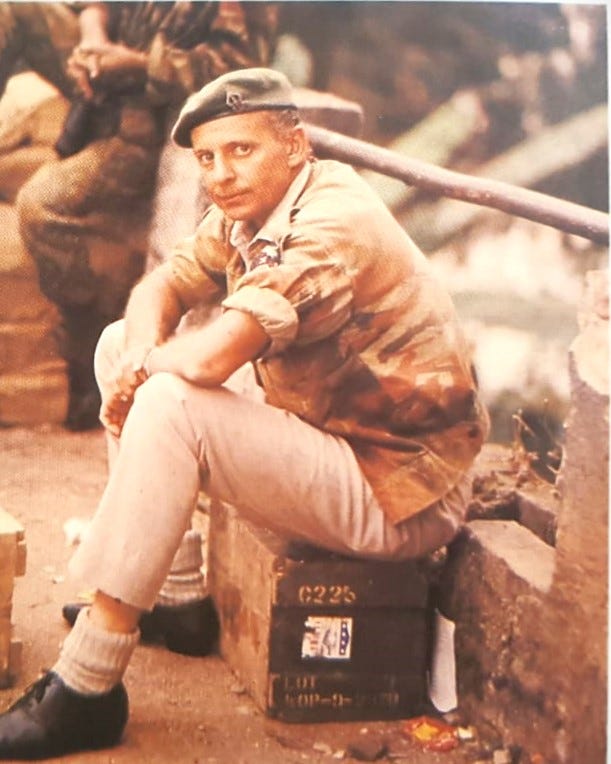
Another mercenary battlefield in Africa would be the Nigerian Civil War, or Biafran War, from 1967 to 1970. Faced with overwhelming odds from the Nigerian government, Biafran rebels would look to hire foreign fighters to help their cause. But the Nigerian rebels lacked the same resources that the Congolese government had, so they would need to cast a wider net when hiring. A German national and French Foreign Legion veteran named Rolf Steiner was put in charge of assembling 4 Commando. Steiner was also able to convince rebel leadership that having a brown-water navy would be beneficial, with the amount of rivers running through eastern Nigeria, this would prove a smart move. Chris-Craft Boats would be purchased and would be modified to carry heavy machine guns and used to raid and harass enemy supply lines. In addition, the Nigerian rebels were able to scrounge together an “air force” of sorts by hiring Canadian, Swedish, and Polish pilots, some of whom had served in World War 2 and other African conflicts. Mercenary pilots would counter government air patrols by flying at night and use that advantage to resupply forward rebel bases. Overall, mercenary units in the Nigerian civil war would have to rely on hit-and-run attacks and train local forces to conduct a guerrilla-style campaign. But unlike in the Congo, where mercenary forces would play an important and impactful role, in Nigeria, the professional army was better trained and equipped. By January 1970, the breakaway Republic of Biafra was no more.
While the Congo and Nigeria would be the main theaters of mercenary operations during the Cold War, hired soldiers would also make appearances in Angola and Rhodesia. The Rhodesian government would turn to “foreign volunteers” to help fill their ranks. Their status as mercenaries is a little more controversial, as they received the same pay as regular enlisted soldiers. The US would provide financing to UNITA and FNLA to hire South African and French mercenaries to help augment their offensive capabilities. But as US support for UNITA/FNLA became more overt, financing for mercenary hiring became less and less consistent. In addition, in 1976, MPLA forces would capture over a dozen mercenaries, British and Americans, who would then be put on trial and executed. Some of those executed had been recruited via newspaper ads in Britain and the US. In fact, the MPLA government would film the trial, and later would broadcast the daily proceedings for propaganda purposes. This would come to be known as the Luanda Trial, and it would throw a spotlight on mercenary activities in Africa and the world at large, which became inescapable. Governments the world over would begin to introduce regulations that would restrict the use of mercenaries. And, generally, the practice would become frowned upon, even among nations that had once turned a blind eye to their use.
The Cold War would see the final evolution of the “classic” mercenary, an image that had been largely unchanged since the earliest days of hired soldiers. While their use would be limited to, generally, the continent of Africa, what happened there would affect the trajectory of the entire mercenary profession for decades to come. Names like ‘Mad’ Mike Hoare and Jean ‘Blackjack’ Schramme would have no place in what was to come next. Bob Denard would meet a more dramatic ending with his failed coup attempt in the Comoros in 1995, his fourth attempt, actually. This time, it would be the French government that would intervene and arrest this soldier of fortune. The mercenary would need a makeover, some PR, and a corporate structure to be accepted in the coming post-Cold War world. The irony was that this new structure would be born on the very same continent that the classic mercenary would die.
A very good read, thank you for sharing.
I too recently finished drafting a piece that slightly interconnects with the Congolese conflict you discuss so this is very relevant.
What I appreciate most is your detail on the different actors within the conflict, and how many of them were foreign actors, supported by internal Congolese warlords.
Shame that the fate of many African mineral-rich countries' post colonial timelines have been plagued by such conflicts.
Excellent writing, and very interesting indeed 👍