The DRC and M23
Ghosts of the Second Congo War

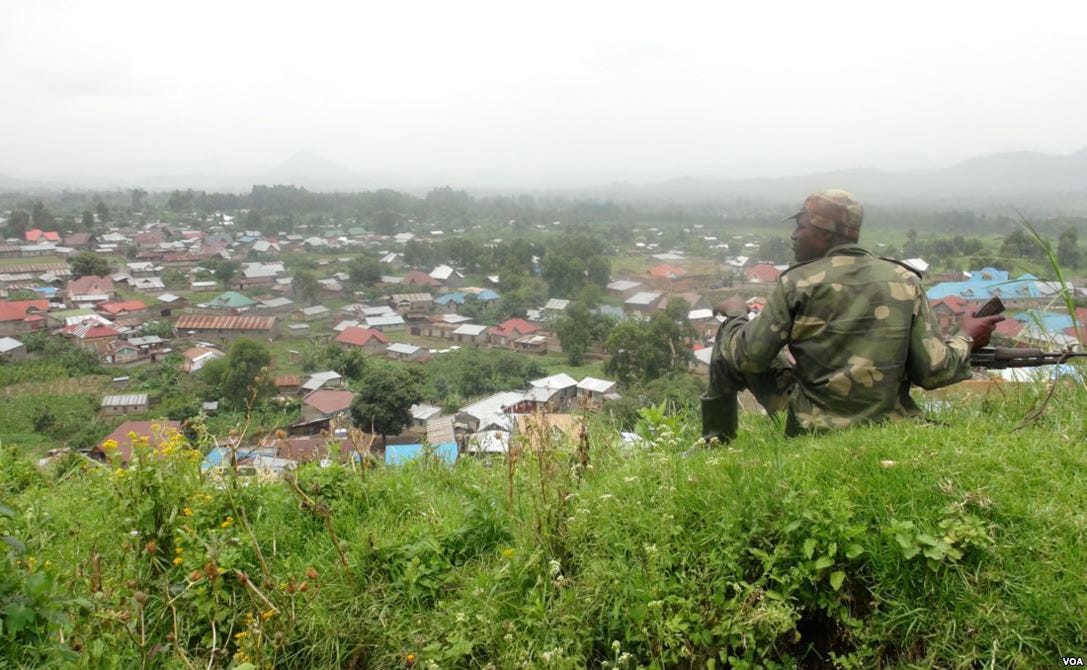
With the situations in Gaza and Sudan gathering attention around the world, there has been much less space for the historically complex and delicate situation in the Congo, more specifically North Kivu. The images that do make it out, mainly via social media, are intense and terrible. Many in the West have been quick to point to mineral resources as the main cause and motivation behind the clashes in eastern Congo. But this narrative oversimplifies and ignores other more pressing and nuanced factors in this conflict. In fact, this mineral-focused narrative belies a true ignorance of African history in the post-Cold War era. The current conflict in North Kivu, that has since spilled over into South Kivu, has been part of a trend of consistent security deterioration since late 2021, and has been exasperated and fueled by Rwandan and Ugandan support, with minerals playing only a minor role at best. But fortunately, there has been some recent progress on a diplomatic solution. All considered, the world is going to have to take a more understated approach to truly understand this conflict and push regional players to take a more constructive role in its resolution.
In November 2021, the first signs of a renewed M23 Movement appeared. Attacks were launched against multiple villages close to the Rwandan border. But it wouldn’t be until March 2022 when M23 would launch their main offensive action in eastern Congo, specifically in the North Kivu region. As of January 2025, M23 has had numerous battlefield victories and has succeeded in securing all of North Kivu province, this includes the capital city of Goma. M23 has also made significant gains in portions of South Kivu. As opposed to their first attempt at power in 2012-2013, where M23 was indiscriminate in its targeting of civilians, since November 2021, M23 has been much more careful. This could be seen as an attempt to foster support among the local populace, with an eye towards a future political agreement with the Congolese government. Although, as the conflict has continued and spread, civilian casualties have risen overall. As government forces, mainly the FRADC (Armed Forces of the Democratic Republic of the Congo), have retreated, local militias have stepped in to fill the vacuum. The main group being the NDC-R (Nduma Defense of Congo-Renovated), this group is a splinter faction of the regular NDC but has decided to fight not only M23 but certain elements of the FRADC. This is only one example of other smaller groups, some aligned with the Congolese government and others against, that have created a complex security situation with no easy path to resolution.
After M23’s earlier defeats in 2012-2013, Rwanda saw an opportunity to shelter the group within its borders. This shelter, provided actively by Rwanda, was integral for M23 to reconstitute itself and prepare for later military action. And now with these new attacks, all the evidence points to direct Rwandan military support. It has been reported that up to 4,000 RDF (Rwandan Defence Force) personnel are fighting with M23. The Rwandan government has engaged in a kind of double-speak in regards to its involvement in M23. Generally, they have denied directly supporting the group, but on the other hand, they have voiced support for the group’s political objectives. In addition, in January 2025, Rwanda officially broke off diplomatic relations with the DRC to show support for the M23 movement. It has also been reported that Uganda has also been supportive of M23, though not as directly as Rwanda. This is an interesting change, in that when M23 first emerged in 2012-2013, Rwanda and Uganda were at odds over the group. This change in regional dynamics will allow M23, with Rwandan support, to operate more freely in the region. But the Congolese government isn’t standing alone; Burundi has deployed around 10,000 troops to eastern Congo to help fight M23. Most distressing is the further involvement of regional players in Rwanda, Uganda, and Burundi. For some, this is a somber déjà vu moment. Those that saw the First and Second Congo War might see unsettling parallels to this current situation.
One economic motivator for M23 and Rwanda is the various mineral deposits in eastern Congo. Some have valued the mineral wealth in this region at up to $1 billion. Of course, it must be emphasized that this would represent only a small faction of the mineral trade in central Africa. It’s hard to make the argument that Rwanda’s interest in eastern Congo is solely motivated by mineral wealth, based on the rather meager sum in regards to the big picture. Another point to keep in mind is that within the area that M23 has been “interested” in, gold is the main export, not lithium or coltan. Gold is much easier to smuggle and doesn’t need much processing to be sold. Sadly, the world’s obsession with tying every conflict in Africa to natural resources, since the end of the Cold War, has only produced ignorance and bad analysis. Overall, there has been an overemphasis on the mineral resource question in regards to eastern Congo and M23. An overly simplified answer is being used to explain an intensely complex political situation that has turned violent.
A bright spot in this relatively somber current event has been the “set of principles” agreement reached by the interested parties recently in Doha, Qatar. But this is merely the beginning of a long process that still might end up being unsuccessful. In fact, mediation had been “passed” to Qatar after Angola had stepped away as the original mediator, frustrated with a lack of progress. Whatever form a possible future peace process takes, it will need to address the very real issues that were left unresolved after the conclusion of the Second Congo War. In addition, any potential direct peace negotiations will have to include Rwanda and potentially Uganda as well if there is to be a comprehensive regional understanding of political norms going forward. Post-Cold War Africa is an under-studied and under-analyzed part of the continent’s vast history. If one is to truly understand the current situation in eastern Congo, one should start there. Where natural resources do play a role, a small one at that, history, power politics, and regional dynamics are the true keys. Rwanda has shown no signs of backing down from its general support for the M23 Movement, and with a lack of strong international pressure, they are unlikely to do so in the imminent future. That can only be done with the support of other regional partners, like Angola, Zimbabwe, and other nations that were dramatically affected by the Second Congo War and its aftermath. It would be in these countries’ best interest not to see another continental conflagration. In the end, this conflict will only be solved by African nations, and more specifically those of Central Africa. The West and the rest will have to sit by and hope for the best.
https://acleddata.com/report/resurgence-and-alliances-march-23-movement-m23
https://africacenter.org/spotlight/risk-of-regional-conflict-following-fall-of-goma-and-m23-offensive-in-the-drc/