The New North Pole
Militarization at the Roof at the World

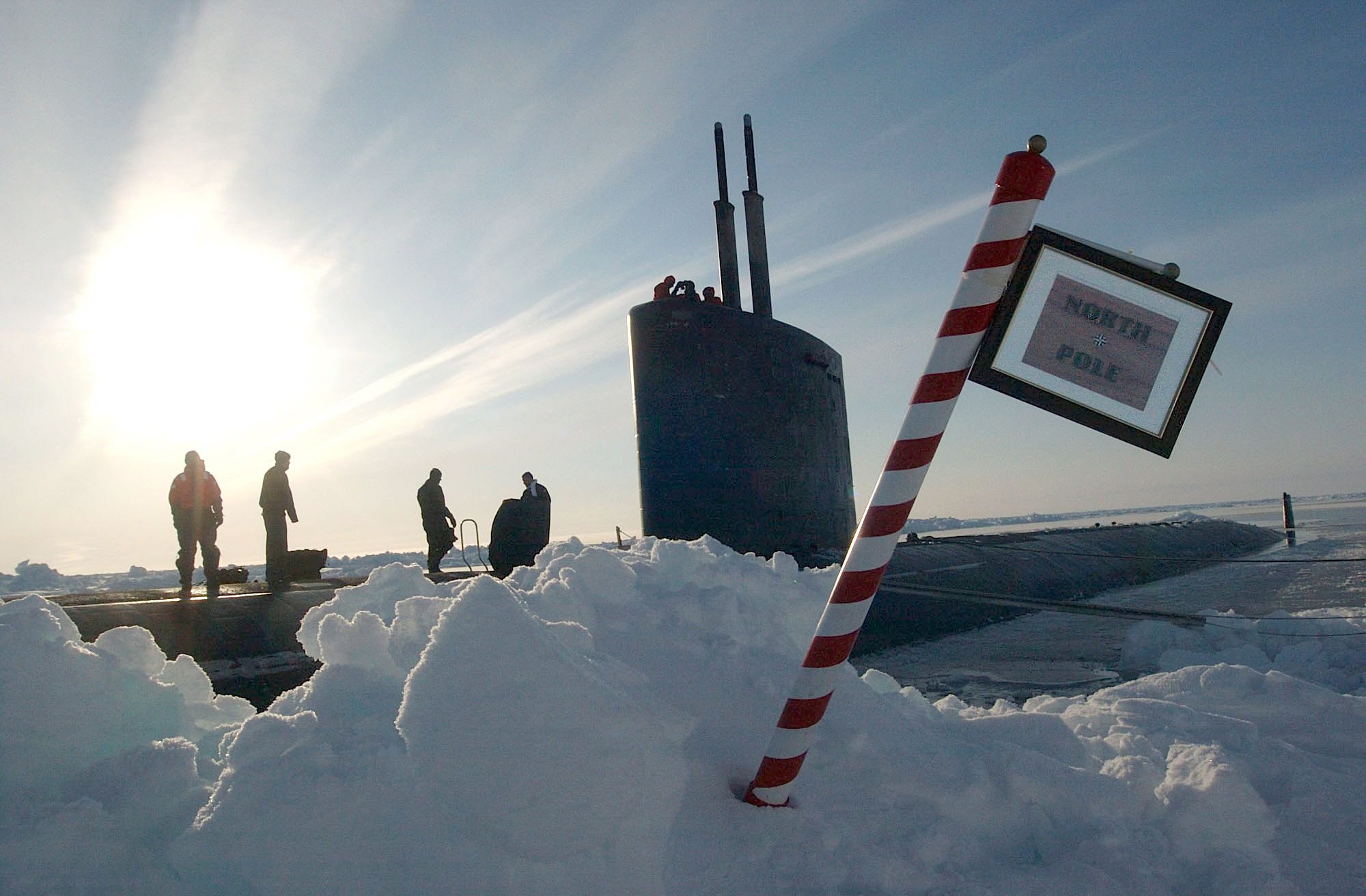
In 1968 a US film named Ice Station Zebra was released to little fanfare, and was a box-office loser. It depicted a semi-fictional race between Anglo-American and Russian forces for a top-secret and highly advanced camera that had been lost in the Arctic. The movie ends with a small-scale firefight between the two forces, but fortunately cooler heads prevail and escalation is avoided. Fast-forward to 2025, and what was once seen as “somewhat plausible” in the late 1960’s is still true now. In the last 10 years the Arctic region has seen a surge of geopolitical activity, and more specifically militarization. This has generally coincided with increased NATO-Russia tensions since the Russian annexation of Crimea in 2014. And with the general invasion of Ukraine in February 2022, this has only further increased military activity. Adding to that, increased interest in natural resources, and you have an evolving situation at the top of the world. Going forward, Russia will have to rebalance its Arctic assets with their recent commitments to Eastern Europe, this will be taken into account with regards to increased Chinese presence in the region, and newly minted members of NATO will change the strategic landscape of the Arctic.
Since the Russia invasion of Ukraine in February 2022, the Russian military has had to deploy additional forces away from its Arctic bases to the front in eastern Ukraine. In one sense this has objectively lessened the Russia military presence in the Arctic region, but this will not last forever. This deployment was mainly focused on the Kola Peninsula, not too far from the Finnish boarder. Part of the Arctic region lies within sovereign Russian territory, so in the mid- and long-term Russian forces will likely rotate back into the area. Additionally, this has not stopped Russian elements from engaging in hybrid operations, mainly on the Finnish boarder. Recent reports have indicated that Russian authorities have directed larger and larger groups of migrants to cross the Finnish boarder, so much so that Finland has decided to close most boarder crossing with Russia. To help further offset a decreased military presence in the region, Russia is hoping to see increased Chinese activity. Both Russia and China have interests that sometimes align in the region, other times less so. Russia hopes that a Chinese presence can offset the decrease in there own presence in the region. Though it does good to bear in mind that China is a self-appointed “near-arctic state” and has no actual close proximity to the region. And thus, will very likely never have a large physical presence in the region. None the less, this has not stopped the Chinese from surging production of ice breaking ships. Overall, Russia will continue to maintain a significant military presence in it’s Arctic region but for the foreseeable future will have operate with a numerically diminished force and a minor Chinese presence. But in the end, Russia will most likely be on it’s own in any future potential confrontation.
Before Finnish and Swedish ascension, NATO planners had to deal with a rather large “question mark” on their northern flank. They were left to guess whether either state would stand with them in a confrontation with Russia. Inversely, plans needed to be made for possible Russian aggression towards either state. This “question mark” has now been filled in. Now NATO planners stand ready to integrate Finnish and Swedish forces into future battle plans. This will deal NATO a massive advantage in the High North theater in any future confrontation. Both nations bring significant expertise in Arctic warfare and region specific equipment. This recent development will force the Russians, mainly quartered in the Kola Peninsula, to make hard choices in the mid-term. And with the changing energy landscape in Europe, who now depend increasingly on Norwegian energy supplies, defense of these assents will be incredibly important to NATO war planners. Swedish and Finnish NATO membership makes this quite a bit easier. An added advantage, specifically on the Swedish side, is NATO will now have a free hand in preparing defenses along most of the Baltic Sea. Which will effectively make it a NATO lake. Another benefit is that Europe will be better at filling the holes in their own perimeter and be able to rely less on the United States. Greater European cohesion on defense, especially in the Arctic region, has always been a struggle. But with active Swedish and Finnish participation, one more obstruction has been removed.
All invested parties see the advantage of deploying specific types of military assents to the Arctic region. Ones that work well in the unique environment and terrain, specifically space-based systems and unmanned recon assets. The use of certain kinds of space-based ISR (Intelligence, Surveillance, and Reconnaissance) assents and unmanned systems (aerial and naval) have unique opportunities to play decisive roles an Arctic security environment. Regarding space-based assents, special polar-orbit satellites are key, ones that circle from the north to the south poles. As opposed to those with geosynchronous orbit. Another advantage to space-based communication systems is that it will allow Arctic deployed assets and installations to rely less on more vulnerable sea-based fiber-optic cables. But there are some limitations to satellite-based systems, specifically in the Arctic region. GPS systems are less reliable at the poles and can be more susceptible to ground based EW (electric warfare) and jamming systems. Additionally, underwater unmanned vehicles (UUV) will play a much larger role than in other theaters due to most of the Arctic flouting on the ocean. And as Europe has grown more dependent on Norwegian gas fields, which are of course in close proximity to the Arctic region, having a full situational awareness will be even more important. Overall, all invested parties in the Arctic region will need to employ, or adapt to, advanced ISR assets and capabilities. Generally the Russians may find themselves in the back-foot in this arena. This is another area where Russia may come to depend on further Chinese support, but as mentioned earlier this support will always be limited by geography.
Over the course of human history, and specifically with the advent of advanced maritime technologies, the Arctic region has seen significant interest from various world powers. Whether it was the British Navy searching for new sea routes to outwit there continental adversaries, or now with Chinese ice breakers attempting new routes for European trade. But what is new is the element of militarization; nation-states wanting to leverage military assents in the Arctic region for strategic advantage. While in the short-term direct Russia activity in the region will likely remain minimal, in the mid- and long-term Russia activity will increase. And with the Chinese almost certainly to remain in a support role, the Russians may come to rely on their technical assistance. NATO faces a new strategic paradigm with full membership for Sweden and Finland. This will put further pressure on Russia to adapt, and change to less traditional tactics. And both groups will need to leverage the cutting edge of space-based and unmanned reconnaissance systems, if full situational awareness is to be maintained. The Arctic region is only going to see increased presence and competition from the world powers. This again makes the film Ice Station Zebra an interesting and relevant, although fictional, case use to observe. Hopefully, if there ever is a confrontation “cooler” heads will prevail.
https://www.clingendael.org/publication/shifts-arctic-security
https://www.csis.org/analysis/addressing-arctic-vulnerabilities