
The War Nobody Watched
Azerbaijan, Armenia, and the end of the post-Soviet order

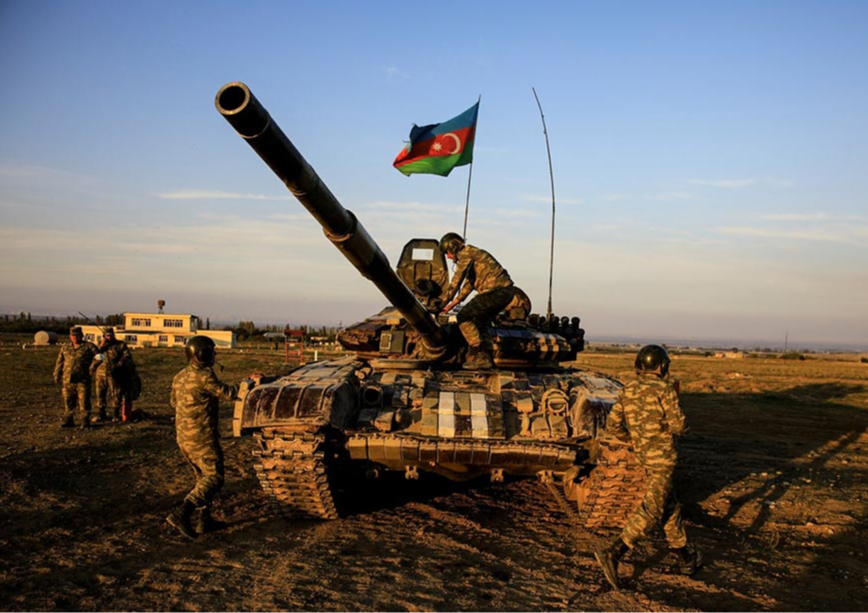
On September 19th, 2023, a 30-year-long conflict was put to a definitive end. Azerbaijani President Ilham Aliyev announced that a major “anti-terror” operation was about to take place against the breakaway state of Artsakh. Within 48 hours, Azerbaijani forces would occupy all of the former Republic of Artsakh, and over 100,000 ethnic Armenians would be pushed out, ending 1000 years of their presence in the region. This event would barely get a mention in the mainstream press, whether in the East, West, or South. And while the immediate ramifications would remain localized, over time, this event would shift the entire geopolitical landscape of the South Caucasus.
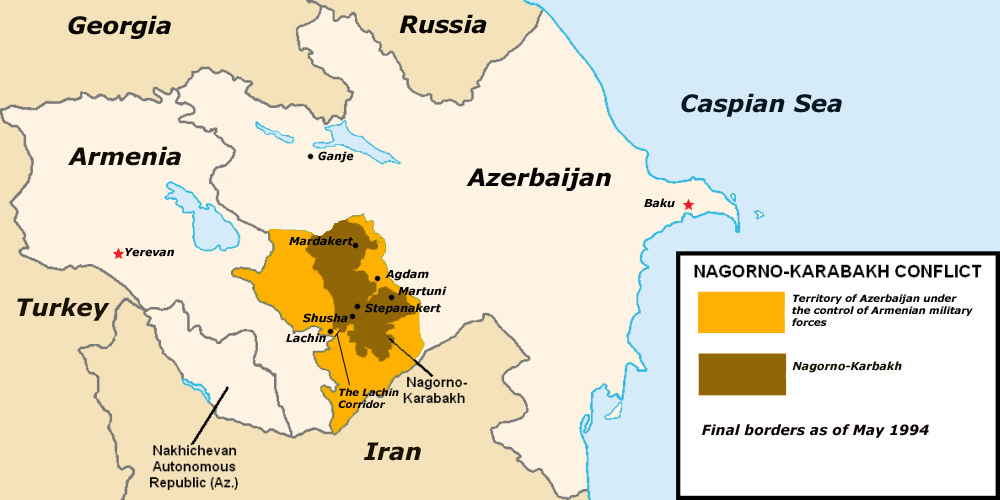
While the political status of Nagorno-Karabakh (later the Republic of Artsakh) has been in question since the fall of the USSR, the most recent turning point came with the 2020 Second Nagorno-Karabakh War. Tensions had simmered since the end of the first war in 1994. Once known as a frozen conflict, no true solution was found with the 1994 Bishkek Protocol. Hostilities would commence on September 27th, 2020, with an Azerbaijani ground offensive. The Azerbaijani military would make heavy use of both drone strikes and long-range missile attacks. These attacks would paralyze the Armenian air force and its air defenses. They would also employ a large amount of artillery, with drones used to spot targets. Over the course of 44 days, Armenian and Artsakh forces would be pushed back to secondary defensive lines, and in other cases, overrun completely. And after the fall of Shusha, the second-largest city in Nagorno-Karabakh, Russia was able to get both sides to agree to a ceasefire. But Azerbaijan was not done yet.
The geopolitical fallout was felt quite quickly, even if it was just regionally. Fingers were quickly pointed at Russia for its failure to fully protect its CSTO ally, Armenia. This, combined with Russia’s historical protection of the Armenian people from both Azeri and the Turks, led to a serious loss in confidence in Russia as a security guarantor. This could easily be explained by Russia’s ongoing commitment to military action in Ukraine. Later in February 2024, Armenia would freeze its membership and start steps to withdraw from the organization formally. It should be noted that Russia did deploy peacekeeping forces to Artsakh upon the conclusion of hostilities on November 10th 2020. Like any peacekeeping operation, their positioning was meant to ensure both sides meet their responsibilities and to deter violations. But with Russia increasingly tied down in Ukraine, Armenia should have known a Russian response to a possible Azerbaijani violation would be almost nonexistent.
On the other hand, Azerbaijan’s ability to launch such a formidable campaign against Armenia was significantly bolstered by Turkey’s support, and to a lesser extent, Israel’s backing. Turkey was able to arm the Azeri army with its latest drones and self-propelled artillery. In addition, Israeli reconnaissance drones proved decisive, along with loitering munitions that were used against Armenian defensive positions. Turkey has had a long relationship with the Turkic people of Azerbaijan. Turkey was, in fact, the first nation to recognize Azerbaijani independence after the dissolution of the USSR in 1991. Israel has had a far more complex and short relationship with Azerbaijan. Like Turkey, Israel was very quick to recognize the newly independent Azerbaijan. And soon, a security and economic relationship would develop between the two. Israel would come to see Azerbaijan’s potential energy supplies as hugely important. Later, as Azerbaijan generated revenue from its energy extraction operations, it would channel these funds into importing Israeli military equipment. Both Turkey and Israel would prove decisive in their backing of Azerbaijan during the 2020 conflict. But what would come later wouldn’t need any diplomatic or security cover, sadly.
All the while, things never really calmed down much in Nagorno-Karabakh. Beginning in December 2022, Azerbaijan would begin a blockade of Artsakh. They were able to do this because over the course of the 2020 conflict, they had seized the surrounding territory. Artsakh was now vulnerable via the Lachin corridor. The Azerbaijani government would claim that this was done to stop the import of weapons and fighters into Artsakh. And on September 19th, the Azerbaijani military would launch a new ground offensive, labeled a “counter-terror” operation, and this time to finish what the 2020 war started: the integration of Nagorno-Karabakh into Azerbaijan. This time, the Azerbaijani victory would be even more overwhelming. With Armenia still reeling from its defeat just 3 years prior, and Russian peacekeepers derelict in the face of the Azerbaijani onslaught, the conflict was over by the next day. At the same time, a mass exodus of ethnic Armenians started. Within 9 days, over 100,000 ethnic Armenians were forced from their homes, in addition to over 200 who were killed trying to escape. And besides Armenia, the international response would be muted at best. Russia would express “deep concern” for this new development, later blaming Armenia for the situation because of its “flirting with NATO”. Later, via leaked documents, it became known that Belarus provided advanced weapons to Azerbaijan, preceding its 2023 ground offensive. It would be this specific detail that would prompt Armenia’s departure from CSTO.
The South Caucasus was very briefly brought to the front of the geopolitical watch list. Azerbaijan broke a Russian-brokered ceasefire agreement, bringing a dramatic end to a “frozen conflict”. And with political cover offered by Turkey and Israel, and even arms provided by Armenia’s own “allies,” Nagorno-Karabakh’s fate was sealed. This series of events also highlights the fluidity of the once solid, post-Soviet space. In the past, Russia had relied on its mere proximity to conflicts like this to keep the “situation” under control. But Russia’s diminishing ability to project force, let alone political power, has now run up against reality. In that space, Turkey has seen fit to project itself, with Israel behind it, albeit a bit further back. Through all of this, Armenia has seen fit further to enhance its relationship with the US and Europe. Further south, Iran will increasingly look warily upon Azerbaijani movements, in an effort to head off any inflaming of their own ethnic Azeri population. All of this became clear in the immediate aftermath of September 2023. The images of thousands of ethnic Armenians fleeing their ancestral homes were morbidly compelling. But only a few weeks later, on October 7th, 2023, the world’s attention would shift…
https://evnreport.com/opinion/what-happened-to-nagorno-karabakh-and-why-it-matters/
https://www.orfonline.org/expert-speak/the-fall-of-nagorno-karabakh-and-its-impact
https://apri.institute/nagorno-karabakh-fallout-one-year-after/
Sharp analysis. I noticed that within this overlooked conflict, the 2020 Nagorno-Karabakh War was the most pivotal yet it got the least coverage due to the global pandemic at the time. 2023 was the conclusion to a chapter, while 2020 was the main event. Using geopolitical maps I mapped out the 2020 Azerbaijan-Armenia conflict in the last chapter of my book, Modern Wars. In it I also look at four other overlooked modern conflicts, but this one really captured the post-Soviet discord.
Great coverage! Thanks!
Footnote: Azerbaijan has allowed Israel to infiltrate Iran from Azeri territory. No love lost between Azerbaijan and Iran (or Russia). Makes an interesting situation for Turkish-Israeli relations.