UAE Reborn, Again?
Another middle power plays its hand…

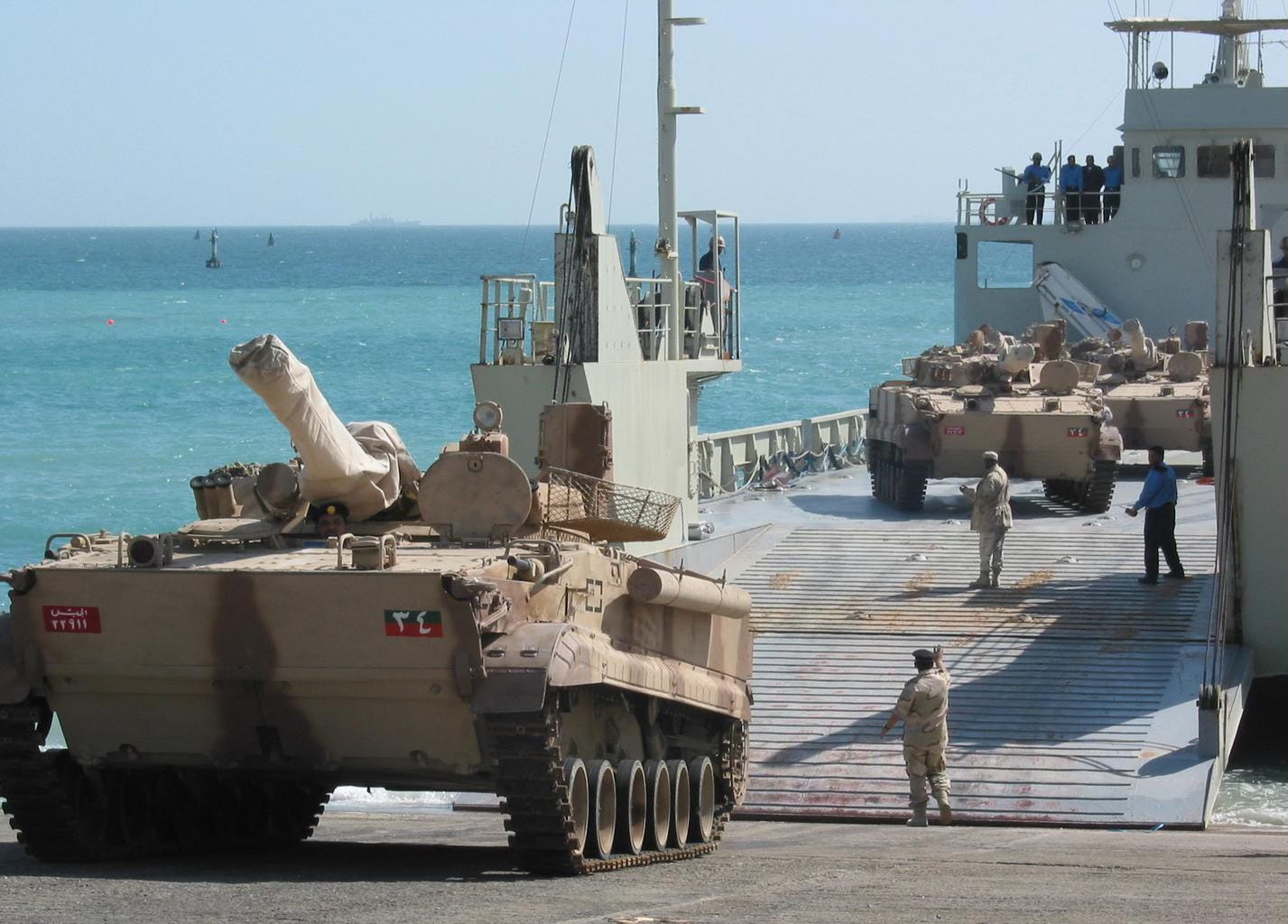
When most of the world thinks of the United Arab Emirates (UAE), the glitz and glam of Dubai come to mind first. Possibly followed by the more culturally centered Abu Dhabi. These two cities, and the international reputation that they have, belie a certain ignorance of the weight the UAE has in the region and the world today. Yes, the Burj Khalifa is a stunning piece of architecture and a worldwide tourist destination. But like other small states in this somewhat awkward geopolitical time, the UAE is more than just a destination for the wealthy and pleasure-seekers. In the last 15 years, the UAE has shown its neighbors, and those around the world, what they are capable of. Since the beginning of the Arab Spring, the UAE took a more activist foreign policy position, but this was soon changed to one of “non-aligned” policy, with economic priorities first. Both policy positions have been buttressed by an extremely capable military establishment that has been able to carry out foreign policy objectives that are impressive when compared to the relatively small size of the state. Overall, the UAE has gone through significant foreign policy changes in the last 15 years, but one thing that has stayed the same is that they have a significant impact but with a relatively small footprint.
The UAE secured independence from the United Kingdom in 1971. And for most of the UAE’s relatively short history this small nation-state kept a relatively low profile in the region. There were a few key exceptions though, mainly small-scale military deployments usually in support of larger multinational efforts, in the Middle East region. Perhaps this was a harbinger of things to come in the way that the UAE would conduct foreign policy in the future. The first overseas UAE deployment was a 750-man unit to the Arab Deterrent Force in Lebanon in 1977. Later, the first UAE troops to be killed in combat would perish in the US-led liberation of Kuwait in 1991. These troops were fighting alongside Coalition forces, and engaged in combat operations against the Iraqi military. Later, after 9/11, the UAE was the only Arab country to send forces to support US actions in Afghanistan. But with the beginning of the Arab Spring in 2010, the United Arab Emirates would make the presence in the region more known, by taking a more activist position regarding foreign policy. But from the beginning, the UAE had become accustomed to backing up its foreign policy objectives with hard-power assets.
The Arab Spring shocked the Arab world like nothing had since the Iranian Revolution of 1979. It would be this seismic event that would push the UAE to take an even more active role in the region. And not just with hard power, but also with diplomatic and economic initiatives. With the onset of the Arab revolutions, the main foreign policy objective of the UAE was to push back on radical Islamist movements and make sure that friendly governments stayed in power. In 2011, the UAE was quick to answer the call by Western powers to help overthrow Muammar Gaddafi by sending fighter aircraft to help enforce the no-fly zone over Libya. Later, the UAE would throw diplomatic and economic aid behind Mohammad Morsi’s ouster Abdel Fattah el-Sisi to curb the Muslim Brotherhood’s hold on Egypt. In addition, the UAE would join fellow GCC members (Gulf Cooperation Council) in sending troops to suppress protesters in Bahrain. But the UAE’s most drastic measure would be taken in strife-ridden Yemen. In the midst of the ongoing Yemeni Civil War, Saudi Arabia led a coalition of nations to fight Iran-backed Houthi rebels. The UAE would be the Saudis’ main coalition partner. This would be the beginning of a multi-year ground and air campaign that would see thousands of UAE troops deployed and dozens of fighter aircraft sent on bombing missions. In a way, this level of intervention makes sense for the UAE. Yemen is geographically very close, and any spillover would likely affect the Emirates. The UAE has also been worried about disruptions to shipping lines caused by Houthi rebel attacks in the Red Sea. The UAE also wanted to keep Iranian influence of an Islamist militant movement in check. The intervention in Yemen can be seen at an intersection of all UAE foreign policy objectives.
As the Arab Spring turned to the Arab Winter, the UAE slowly started making changes in their foreign policy that would ditch the activist position for one of non-alignment and economic liberalism. These are the overall policy positions that the UAE currently holds, and the ones that most likely drive foreign policy for the next decade. The UAE has decided that a “zero-problems” position with its neighbors will be the cornerstone of their future foreign policy. In the last seven years, the UAE has gone to great lengths to mend and create new relationships with nations that were once considered adversaries. Iran, Turkey, and Israel have all benefited greatly from this. The UAE has also seen fit to keep close relations with both China and Russia, the latter of which the US has put significant pressure on and had hoped the UAE would follow suit. But this gets to the core of the true driver of this “zero-problems” policy, economic gain. The Emirates is attempting to put economic pursuits above all else, to help facilitate trade, technology exchange, and foreign investment. A subset of their economic pursuits is the UAE’s focus on sea-lane security and sea ports. The Emirates has gone to great lengths in the last few years to ensure secure sea port access. Economic initiatives and incentives for privileged port access have touched Libya, Sudan, and even Iran. Even far away Kenya has seen significant investment from the UAE to sea port construction and modernization. Overall, since 2018-2019, the UAE has seen a significant shift in their foreign policy. From one of an activist, to one of non-alignment and economic liberalism.
The United Arab Emirates is another nation-state that finds itself in a unique middle power status. Like its Gulf neighbor Qatar, the UAE enjoys an outsized level of influence relative to its small size geographically and in regards to its population. But the UAE, unlike Qatar, is far more liberal in its use of hard-power options in pursuit of its foreign policy objectives. This can be linked to its early history where foreign military deployments were used. And with the onset of the Arab Spring, the UAE would start to add more tools in its arsenal. But with a deep and costly direct military intervention in Yemen, the cost began to mount. And as the US has started to pull away from the region and the Saudis starting to go their own way, the UAE has decided to make its own path. This relatively new “non-alignment” policy has benefited the UAE greatly, thus far. But if one thing history has shown us is that non-alignment is not a cause in and of itself, it’s a non-position. And with the main motivator being greater economic gain for an already wealthy country, this is a precarious position to take. This new UAE policy is simply opportunistic realism.
https://www.fpri.org/article/2023/04/big-changes-in-united-arab-emirates-foreign-policy/
https://onlinelibrary.wiley.com/doi/10.1111/mepo.12717