
The Next Resource Wars
The Jordan, the Nile, and the Indus

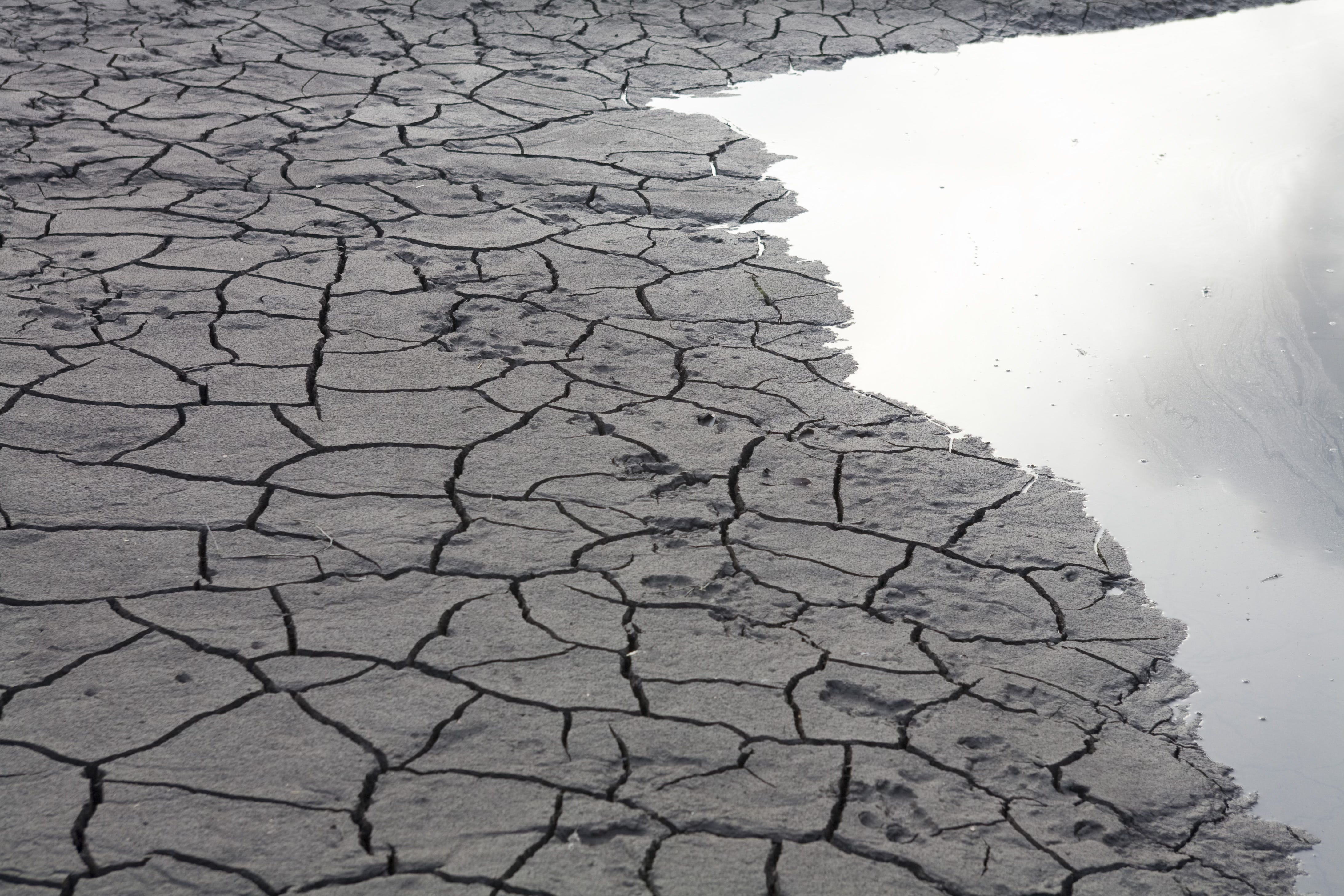
Oil shortages raise fuel prices. Gas shortages raise heating bills. Water shortages kill people. As the world’s attention remains fixed on the Persian Gulf and the Strait of Hormuz, a slower and more dangerous crisis is unfolding across the Global South and beyond. This crisis will be measured not in barrels or cubic feet, but in rivers running dry, aquifers emptying, and nations inching toward conflict over the one resource no nation, Western or Eastern, can survive without.
The Pacific Institute, a California-based think tank, has maintained a record of all documented “water conflicts.” They have documented over 2700 cases since 2500 BC. But 90% of those have occurred since the beginning of the 21st century. It must be kept in mind that most of those recorded are on the local and communal level, not among nation-states. But the trend line is unmistakable; 2012-2021 saw a fourfold increase when compared to 2000-2011. And there has been a surge of interstate water conflict as well. In the last few years, interstate cooperation on water issues has been surpassed by clashes over water issues. Researchers at Oregon State University identified over 2500 water security-related incidents between 1948 and 2008; those that ended with a peaceful agreement went 2-1 against those that sparked conflict. But furthering the research to 2019 has found that water conflicts have overtaken cooperation since 2017. The MENA (Middle East/North Africa) region is considered the most susceptible to this new trend. But other regions like South Asia, sub-Saharan Africa, and the southwest United States find themselves in precarious situations, too.
The Jordan River Basin is one such area in the Middle East that has seen significant conflict regarding water issues. Israel controls the vast majority of the Jordan River and uses it as an important water source for agriculture. Jordan itself draws a significant amount as well, which is regulated by the 1994 peace treaty with Israel. The unfortunate losers in all this are the Palestinian people of the West Bank. They have very limited access to the water due to IDF checkpoints and de facto IDF control of the area itself. But this level of unequal access is not new, and goes back to one of the causes of the Arab-Israeli Six-Day War. The territory gained by Israel in the aftermath of the war lined up perfectly with what they would need to control the Jordan River in its entirety. The occupation of the Golan Heights ensured control of the main tributary, the Baniyas River. And the seizure of the West Bank allowed control of the lower Jordan River and the aquifers in the hills north of Jerusalem. Even after the war, as the PLO would launch guerrilla-style attacks inside Israel and the newly occupied territories, they would specifically target water installations. Even more recently, as climate change and populations have grown, the Jordan River is starting to feel the strain. The river basin itself is starting to dry up, and the river flow has thus declined.
Another area of water conflict is the Nile River. The lifeblood of both Egypt and Sudan, both of these nations have seen significant friction in the 20th and 21st centuries due to water disputes. Of course, it must be kept in mind that the larger Nile River basin is shared not only by Egypt and Sudan but also by Ethiopia, Kenya, and Uganda. The end of European colonization in the aftermath of World War II produced much anxiety in Cairo as past agreements pertaining to water sharing were considered null and void. But in 1959, a new agreement would be signed between the two nations. But there would be a major flaw; none of the other upstream nations were party to the agreement. And as the nation at the literal end of the river, Egypt would raise major concerns in the years to come. In 1979, then President of Egypt, Anwar Sadat, stated, “The only matter that could take Egypt to war again is water.” Later, he would threaten to bomb an Ethiopian construction site on the Blue Nile that he accused of diverting water for domestic irrigation projects. There has been speculation that this has been a driver of Egyptian policy with its southern neighbors, to keep them divided and weak, so that water can flow more freely to the ever-growing Egyptian population.
Another problem area is the Indus River Basin. Starting its flow in the mountainous region of Tibet, in China, it snakes its way through Indian-controlled Kashmir, where it makes its final descent into Pakistan. In the immediate aftermath of the 1947 partition, tensions over water management spiked. A temporary deal was struck in March 1948, but there were serious doubts about its longevity on both sides. It wouldn’t be until September 1960, a deal mediated by the World Bank, that both parties would be satisfied. But in the ensuing decades, both India and Pakistan have seen significant population growth and have thus relied more on the Indus River for domestic water and agricultural needs. What makes this situation unique is that the headwaters are controlled by China, an ally of Pakistan, but a major portion is controlled by India via Kashmir, an enemy of Pakistan and a serious competitor to China. And again, population growth plays a massive role in what comes next. India feels insecure because it can feel the squeeze of both its northern neighbor and western rival. Pakistan feels as though it’s caught between two great powers, and in a situation where it would have the most to lose. And Beijing isn’t eager to play party to a water dispute where China itself is caught between a frenemy and an ally.
Oil has shaped the geopolitics of the last century. Water may well shape the next one. The Jordan, the Nile, and the Indus are not isolated case studies; they are early warnings from a world that has not yet reckoned seriously with what happens when the most fundamental resource runs short. Population growth and environmental change in these three cases have worked together over the last few decades to produce the most serious “water security” issues the world has ever faced. The question is no longer whether water will become a primary driver of conflict. In many places, it already has.
Klare, Michael T. Resource War: The New Landscape of Global Conflict. New York, Henry Holt And Company, 2002.
https://www.worldwater.org/conflict/map/
https://www.csis.org/analysis/what-causes-water-conflict
https://www.cfr.org/backgrounders/water-stress-global-problem-thats-getting-worse
Another crucial water conflict is Afghanistan which is upstream state controlling tributaries of indus and helmud rivers which flow to Pakistan and Iran.
Should any attempt be made to divert flows we could see decades of conflicts
What stayed with me is how the piece shifts the frame from scarcity to control. It also raises a quieter point that feels important. Most of these tensions are not triggered by absolute shortage, but by asymmetry. Who sits upstream, who controls storage, who can delay or divert flow. That is where friction accumulates long before crisis becomes visible.
It makes me wonder whether the next phase of this story is less about conflict events and more about slow leverage. Treaties, dams, data, and seasonal timing shaping outcomes in ways that rarely get framed as conflict, even when the impact is just as decisive. I've been observing that for the past year in certain regions.